Tabling letter
Dear Mr. Speaker:
I am pleased to submit to you the report on the performance of my duties and functions under the Conflict of Interest Code for Members of the House of Commons for the fiscal year ending March 31, 2026, for tabling in the House of Commons. The report is deemed permanently referred to the House of Commons Standing Committee on Procedure and House Affairs, under Standing Order 108(3)(a)(vii).
This fulfills my obligations under paragraph 90(1)(a) of the Parliament of Canada Act.
Sincerely,
Commissioner's message
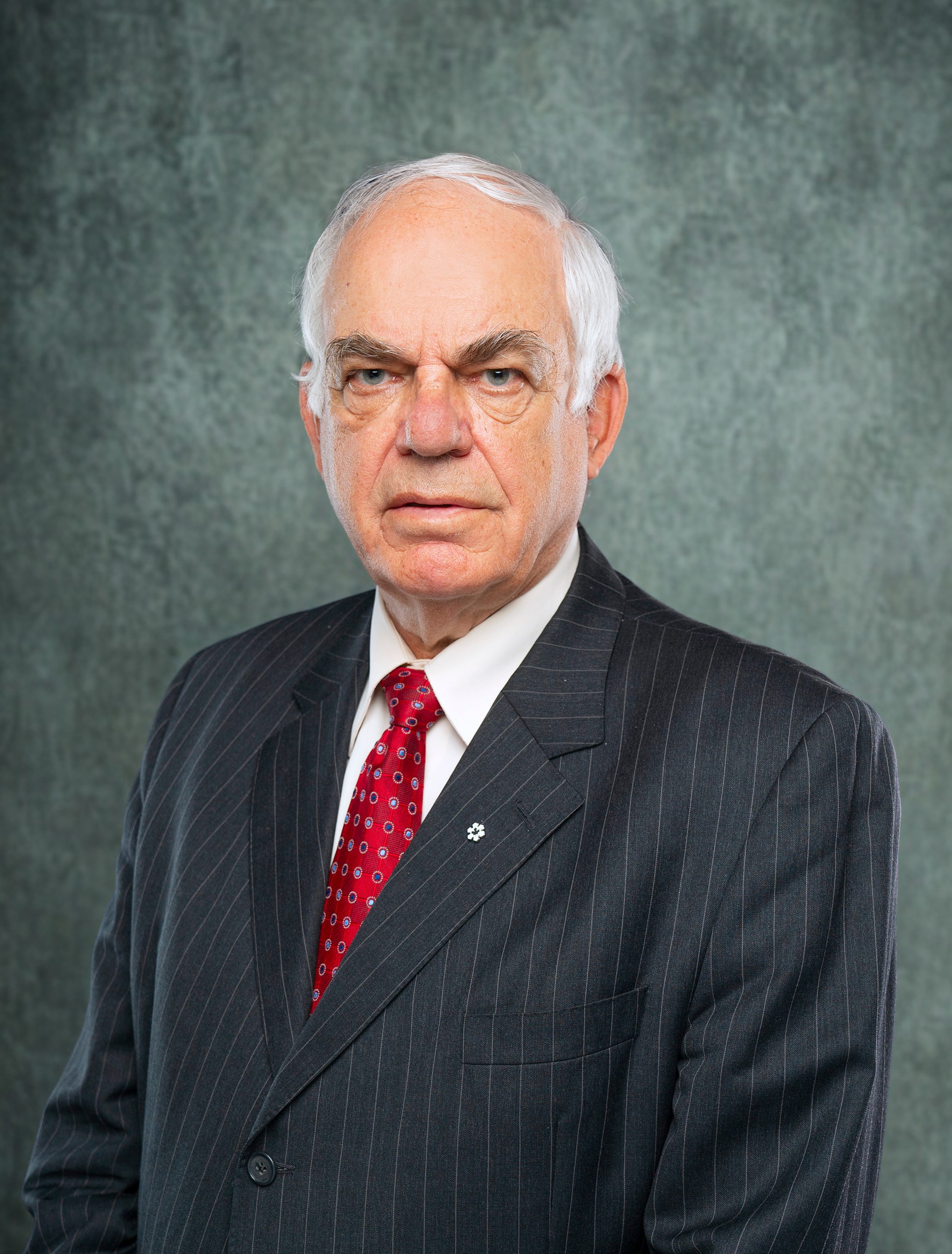
I am pleased to submit to the House of Commons my annual report on the administration of the Conflict of Interest Code for Members of the House of Commons, as required by paragraph 90(1)(a) of the Parliament of Canada Act.
In 2025-2026, the Commissioner's Office continued to follow a mandate-focused approach that supports three key objectives, within the framework of its five-year strategic plan.
The first is to help elected and appointed officials manage their conflicts of interest so competent and qualified people can move in and out of public service without difficulty.
We offer training and educational resources to help them understand and follow the rules, and give them confidential advice.
People with experience outside of the public sector may face potential conflicts of interest because of their business relationships. In addition, anyone may have personal relationships, social connections or investments that could create conflicts of interest. We identify such conflicts by reviewing Members' personal and financial information.
A second objective is to review and report on allegations of conflict of interest. When we receive information that someone may have contravened the Code, we may open a case file to review it. If there are reasonable grounds to believe there was a contravention, we will investigate. While not all case files result in investigations, and not all investigations result in reports, enforcing the Code is a core part of our mandate.
Everything we do ultimately supports a third key objective: helping Canadians trust that the actions of elected and appointed federal officials are free from conflicts of interest. The Code includes transparency requirements, and the Commissioner's Office reports to Parliament and releases public reports. We also share as much information as we can through our website and when responding to requests for information.
The April 2025 general election resulted in high turnover among elected and appointed officials, and more compliance work for the Commissioner's Office. We supported all 343 Members of the House of Commons in meeting their initial compliance requirements under the Code. Most Members completed the initial compliance process by the end of 2025-2026, and the rest were in the final stages of completion.
The volume and complexity of the work meant it was not possible to get them all through the initial compliance process as soon as we would have liked. In the year ahead, we will look at whether there are any changes we can make to our processes and capacity to better support periods of high turnover around general elections.
We submitted two new guidelines and five revised forms under the Code to the House of Commons Standing Committee on Procedure and House Affairs for approval. The Committee approved them and recommended that the House of Commons do the same. As of March 31, the House had not concurred in the Committee's report.
Going forward, we will continue to follow our mandate-focused approach. We remain flexible and ready to respond to new challenges.
Vision, mission, and mandate
Vision
To safeguard public confidence in the integrity of Parliament and government institutions.
Mission
To help elected and appointed public officials avoid conflicts of interest.
Mandate
Administer the Conflict of Interest Code for Members of the House of Commons and the Conflict of Interest Act to manage conflicts of interest and safeguard public trust.
Helping elected officials manage conflicts of interest
A key objective of the Commissioner's Office is to help people elected to the House of Commons manage potential conflicts between their public duties and private interests, so the most competent and qualified people can move in and out of public service without conflicts of interest.
Avoiding conflicts of interest is one of four focus areas in its 2025-2030 strategic plan. Each focus area is a framework for purposeful projects and initiatives, and the plan itself is reviewed every year. Activities in this focus area include simplifying compliance processes, giving Members of the House of Commons clear and consistent advice, and offering education and training that meets their specific needs.
When an elected official has competing interests that could interfere with their ability to be fair and objective when doing their job, their judgment could be affected by the possibility of benefitting themselves or someone they know.
The Conflict of Interest Code for Members of the House of Commons aims to prevent that from happening. Under the Code, Members are in a conflict of interest when they act in any way to further their private (mostly financial) interests or those of a family member, or to improperly further another person's or entity's private interests.
The Commissioner's Office helps Members ensure their actions, while performing their parliamentary duties and functions, are free from conflicts of interest. This makes it easier for experienced and competent people to move in and out of public office, in keeping with the purposes of the Code:
- To maintain and enhance public confidence and trust in the integrity of Members, as well as the respect and confidence that society places in the House of Commons as an institution.
- To demonstrate to the public that Members are held to standards that place the public interest ahead of their private interests, and to provide a transparent system by which the public may judge this to be the case.
- To provide for greater certainty and guidance for Members on how to reconcile their private interests with their public duties and functions.
- To foster consensus among Members by establishing common standards and by providing the means by which questions relating to proper conduct may be answered by an independent, non-partisan advisor.
Who is subject to the Code
The Conflict of Interest Code for Members of the House of Commons applies to all 343 elected Members.
The Code applies in the same way to all elected Members. However, some additional obligations and restrictions apply to those who are ministers, secretaries of state or parliamentary secretaries, because they are also subject to the Conflict of Interest Act as reporting public office holders.
Figure 1: Snapshot of Members on March 31, 2026
| 38 ministers |
| 10 secretaries of state |
| 39 parliamentary secretaries |
| 253 Members who are not ministers or parliamentary secretaries |
| 340 Members |
The number of Members may go up and down during the year if some seats become vacant and by-elections are held.
There were greater fluctuations in 2025-2026 because of the April 2025 general election. When a Parliament is dissolved, triggering a general election, Members of the House of Commons are no longer considered Members and the Code does not apply. There was also one by-election.
The Commissioner's Office tracks these changes in its quarterly statistical reports.
Anyone elected to public office may face potential conflicts of interest because of their family and social connections, business and professional relationships, and financial investments. Their private interests and those of their family could be affected by decisions they might be called on to make or participate in. The more experience people have outside of government, the more likely they will have such conflicts.
The Commissioner's Office helps Members identify and manage potential conflicts of interest by making sure they understand the Code's rules, guiding them on how to submit required information, and advising them on how to follow the rules.
Personal confidential advice
The Commissioner's Office assigns each Member of the House of Commons an advisor to help them understand and follow the rules and guide them on meeting the Code's reporting requirements. They can at any time ask their advisor for confidential advice tailored to their personal situation.
Figure 2: Advice by topic in 2025-2026
| General obligations | 205 |
| Gifts and other benefits | 104 |
| Material changes | 80 |
| Letters of support and fundraising | 69 |
| Total | 458 |
The Commissioner's Office tracks the topics Members ask about every quarter (three-month period) and updates its training and communications to focus on those topics. Requests for advice often reflect what is being talked about in the news. For example, after an election, the Commissioner's Office receives more questions about general obligations and disclosures.
The advice the Commissioner's Office gives individual Members is confidential. It will not share that advice with anyone else or make it public unless the Member formally asks it to. Members are not bound by the same confidentiality requirements. They are free to share information about any advice they receive from the Commissioner's Office.
Education and training
The Commissioner's Office offers Members flexible and accessible learning opportunities to help them understand the rules and other requirements of the Conflict of Interest Code for Members of the House of Commons. It communicates with them directly throughout their time in public office.
When they are first elected, it sends them information that explains the rules they must follow.
During their term, the Office shares the Commissioner's reports and any other information that may be relevant to them.
These and other communications are part of an outreach strategy that includes education and training opportunities designed to be flexible and accessible. The Commissioner's Office continually updates the strategy to reflect current information needs and emerging trends.
It offers Members and the staff who support them live online and in-person training, and interactive learning tools. In 2025-2026, the Commissioner's Office held four educational sessions on the Code.
The Commissioner’s Office offered presentation on the Code to party caucuses after the April 2025 general election. One presentation was delivered.
The Code requires the Commissioner's Office to provide mandatory training on the Code for Members, who must complete it within 120 days after their election is confirmed. It has developed an online, self-directed course that Members can access through Source (the parliamentary intranet). The course, which includes real-life scenarios and interactive elements, helps Members understand the rules, how to manage potential conflicts of interest, and when to seek guidance. Of the Members whose election was confirmed in 2025‑2026, 328 (over 96%) completed mandatory online training on the Code by March 31, 2026.
Guidance on reporting requirements
Under the Conflict of Interest Code for Members of the House of Commons, Members must give the Commissioner's Office detailed personal and financial information for themselves and their family members. Most of it is kept private, but some is posted in the public registry as required by the Code.
The Code's initial and ongoing reporting requirements ensure the Commissioner's Office has the information it needs to help Members avoid conflicts of interest. They also support transparency.
All Members must complete an initial compliance process. It features one‑on‑one meetings with their assigned advisor at the Commissioner's Office that are an opportunity to:
- walk through the Code's rules in detail
- understand how its requirements apply to their specific duties
- explore the nuances of their file or circumstances
- clarify expectations and reporting timelines
- ask questions in a confidential environment.
The initial compliance process includes two separate 60-day periods, separated by an unspecified amount of time.
The first 60-day period starts when notice of a Member's election or re-election is published in the Canada Gazette. It ends when they give their advisor in the Commissioner's Office a confidential Disclosure Statement (containing detailed information on their assets, liabilities, outside activities and other interests and those of their family members) and supporting documents, like financial statements.
In the time between the two 60-day periods, their advisor reviews the Disclosure Statement and advises them on how to organize their affairs to avoid conflicts of interest. They then prepare a summary (called a disclosure summary) of the information in the Disclosure Statement for the Member to review and approve. Factors that affect how much time this takes include the file's complexity, the information's completeness, the Member's availability, and the advisor's workload.
The second 60-day period starts when the Member receives their disclosure summary. It ends when the Commissioner's Office receives the approved summary.
When the Commissioner's Office posts the summary in the public registry, the initial compliance process is over.
By March 31, 2026, the initial compliance process was completed for 270 Members.
While in office, Members must meet ongoing reporting requirements. They must tell the Commissioner's Office about the following things, within certain deadlines, and some of this information is made public:
- Material changes (any changes to the information in their Disclosure Statement).
- Gifts and other benefits worth $200 or more that they or their family members accept, and multiple gifts received from one source in a 12-month period with a total value of $200 or more.
- Sponsored travel (any travel worth more than $200 that is not fully paid by the government, a political party, a recognized parliamentary association, or by the Members themselves).
- Abstentions. If present when a matter they have a private interest in is being debated or voted on in the House of Commons or by a committee they are part of, Members must disclose the general nature of the interest to the Clerk of the House of Commons. The Clerk will send the disclosure to the Commissioner, who will post it in the public registry.
If they have a private interest that could be affected by their parliamentary work in other situations, they must inform the party concerned about the general nature of the interest and send a written notice about it to the Commissioner, who will post it in the registry.
Figure 3: Public declarations by Members in 2025-2026
| Disclosure summaries | 285 |
| Gifts and other benefits | 20 |
| Material changes | 15 |
| Sponsored travel | 25 |
| Private interest | 0 |
| Total | 345 |
In 2025-2026, the number of public declarations was down 24% from the year before, mostly because Members filed fewer notices of material change (a change to any of the information in the Disclosure Statement that they fill out during the Code's initial compliance process). All Members had to complete the initial compliance process after the April 2025 general election, so there was no information on file for them to change.
Each year, Members must complete an annual review that involves going over their information with their advisor at the Commissioner's Office and updating it as needed. No annual reviews were done in 2025-2026. That is because all Members had to complete the initial compliance process after the April 2025 general election.
Figure 4: Compliance processes completed in 2025-2026
| Initial compliance processes completed | 270 |
| Annual reviews | 0 |
Reviewing and reporting on alleged conflicts of interest
Enforcing the Conflict of Interest Code for Members of the House of Commons is a core part of the Commissioner's mandate.
It is captured in one of the key objectives of the Commissioner's Office: to review and report on allegations of conflict of interest involving elected and appointed officials. It also relates to a focus area of its strategic plan: avoiding conflicts of interest.
Enforcing the Code by investigating possible conflicts of interest provides transparency and accountability.
Investigations
The Commissioner can start an investigation (called an inquiry) under the Code in one of three ways:
- When asked to investigate by a Member of the House of Commons who has reasonable grounds to believe that another Member has contravened the Code. The Commissioner's Office received three inquiry requests from Members in 2025-2026.
- When directed to by the House of Commons (this has never happened).
- On his own initiative if he has reasonable grounds to believe, based on information from any source, that a Member may have contravened the Code. The Commissioner's Office received six inquiry requests from members of the public in 2025-2026.
When the Commissioner finds in an inquiry that a Member has contravened the Code, he may recommend appropriate sanctions. However, it is the House of Commons that decides whether or not to impose any sanctions.
Inquiry reports are made public on the website of the Commissioner's Office, and in the public registry. They are educational tools that can help Members understand how the rules apply and prevent future conflicts of interest. They also support transparency and accountability.
The Commissioner did not issue any inquiry reports in 2025-2026.
Case files
The Commissioner's Office opens a case file if it becomes aware of a concern or an allegation that a Member may have contravened the Code. This does not mean it is investigating, but is simply reviewing the matter to determine if there are grounds to investigate.
When the Commissioner's Office opens a case file, it gathers and reviews all relevant information from public sources. This is called an initial review.
Not all case files result in inquiries. The Commissioner will investigate only if he finds that an inquiry is warranted. If he finds an inquiry is not warranted, the case file is closed.
When a Member has provided reasonable grounds to believe another Member has not met their obligations under the Code and asks the Commissioner to investigate, the Commissioner's Office does not open a case file. Instead, it follows a process set out in the Code for dealing with valid inquiry requests:
- The Commissioner forwards the request without delay to the Member named in it and gives them 30 days to respond.
- After receiving the response, the Commissioner's Office conducts a preliminary review to determine if an inquiry is warranted.
- Within 15 working days of receiving the response, it notifies the Members involved whether or not the Commissioner will conduct an inquiry.
In the meantime, the Member who requested an inquiry is not allowed to say anything about it publicly until the Commissioner has completed the preliminary review and notified the Members involved.
Case files (a case file is a concern or allegation reviewed by the Commissioner's Office)
-
Total case files: 9
-
Ongoing: 3
-
Closed without an examination: 6
-
Closed with publication of report: 0
-
Figure 5: Breakdown of case files in 2025-2026
| Subject of each case file | |
| Current or former Member of the House of Commons | 9 |
| Source of these case files | |
| Member of the House of Commons | 3 |
| Media | 0 |
| Member of the general public | 6 |
| Within the Office | 0 |
| Nature of the concern | |
| Furthering a private interest (section 8 of the Code) | 3 |
| Required disclosure of information (sections 20 to 24) | 2 |
| Sponsored travel (section 15) | 2 |
| Gifts and other benefits (section 14) | 1 |
Fostering public confidence
Helping Canadians trust that the actions of elected and appointed federal officials are free from conflicts of interest is a key objective of the Commissioner's Office.
In fact, everything it does ultimately supports this objective, including projects and activities in three focus areas identified in its strategic plan:
-
Avoiding conflicts of interest – Communicating clearly and accessibly about the Conflict of Interest Act and the Conflict of Interest Code for Members of the House of Commons to support transparency and accountability.
-
User-friendly experience – Ensuring that public office holders have positive interactions with the Commissioner's Office so they feel comfortable asking for advice when faced with potential conflicts of interest.
-
Tools, knowledge and skills – Making sure employees have what they need to fulfill the Commissioner's mandate effectively.
As an independent, non-partisan entity, the Commissioner's Office is well placed to ensure impartial oversight, prevent political interference, and promote accountability.
Supporting transparency
The Commissioner's Office is as open as possible with Parliament and Canadians.
That is because transparency is key to public trust. When information is shared, people can see that the rules are being followed.
Transparency is built into the Conflict of Interest Act through its public declaration requirements. Some of the information that reporting public office holders must give the Commissioner's Office is posted in the public registry.
Transparency is balanced by the Act's confidentiality provisions, which encourage public officials to communicate freely and openly with the Commissioner's Office.
The Commissioner's Office respects this balance. When asked to share or comment on confidential matters, it directs those who ask to the public registry.
Public registry
A searchable database that can be accessed through the Office’s website, the public registry contains all the information about current Members that the Commissioner is allowed to share.
Figure 6: Public registry postings and views
| Postings | Views | |
|---|---|---|
| 2025-2026 | 1,248 | 190,000 |
| Five-year average | 1,260 | 126,900 |
The public registry was accessed 520 times a day on average in 2025-2026. It tends to get more visitors when an issue about someone’s disclosures comes up in the media, or if the Commissioner’s Office has posted information in the registry about a high-profile official.
When Parliament is dissolved (as it was in March 2025), triggering a general election, Members of the House of Commons stop being Members, so the Commissioner’s Office removes their information from the registry. After a general election, information for new and re-elected Members is posted in the registry once they have completed the Code’s initial compliance process.
Reporting to Parliament
The Commissioner has a duty to report to Parliament, testify before parliamentary committees, and answer questions from Parliament. As an independent Officer of the House of Commons, he reports to Parliament directly, not through a minister.
By June 30 each year, the Commissioner sends a report on the administration of the Conflict of Interest Act to the Speakers of the Senate and the House of Commons for tabling.
The Commissioner's Office sends communiqués to parliamentarians about its reports and other activities. It sent seven of these in 2025-2026.
The House of Commons Standing Committee on Access to Information, Privacy and Ethics has oversight responsibility for the Commissioner's Office. The Committee reviews its annual spending estimates, and matters related to the Commissioner's reports under the Act.
Figure 7: Committee appearances in 2025-2026
| September 15, 2025 |
House of Commons Standing Committee on Access to Information, Privacy and Ethics Briefing session with the Conflict of Interest and Ethics Commissioner
Commissioner von Finckenstein appeared with Lyne Robinson-Dalpé, Director, Advisory and Compliance Melanie Rushworth, Director, Communications, Outreach and Planning |
|---|---|
|
October 30, 2025 |
House of Commons Standing Committee on Procedure and House Affairs (in camera) Forms and guidelines under the Conflict of Interest Code for Members of the House of Commons
Commissioner von Finckenstein appeared with Lyne Robinson-Dalpé, Director, Advisory and Compliance Michael Aquilino, Legal Counsel |
|
December 8, 2025 |
House of Commons Standing Committee on Access to Information, Privacy and Ethics Review of the Conflict of Interest Act
Commissioner von Finckenstein appeared with Lyne Robinson-Dalpé, Director, Advisory and Compliance Michael Aquilino, Legal Counsel |
In October 2025, the Commissioner asked the Standing Committee on Procedure and House Affairs to approve two new guidelines and five revised forms under the Code. It was confirmed during this process that all changes to guidelines and forms, no matter how minor, must be submitted to the Committee for approval.
The Committee recommended that the House of Commons approve the documents in a report to the House. As they are now public, the Commissioner's Office can identify them here:
- Writing letters of support (guideline)
- Gift rules for Members of the House of Commons (guideline)
- Request for an inquiry under the Code (form)
- Members' compliance status report (form)
- Public statement of gifts or other benefits (form)
- Public statement of sponsored travel (form)
- Disclosure statement for Members and their family members (form)
Once approved by the House of Commons, the new guidelines will give Members consistent information on two important topics. The revised forms reflect plain language principles and feature brief explanatory text, to make them easier to use.
Public communications
The Commissioner’s Office shares as much information as it can with the public, and in different ways, under the Conflict of Interest Code for Members of the House of Commons and the Conflict of Interest Act.
It posts information on its website and on social media and responds to information requests from the media and members of the public.
Figure 8: Website users and page views in 2025-2026
| 2025-2026 | |
| Website users | 218,700 |
| Website page views | 366,500 |
In 2025-2026, the website attracted 70% more users and 30% more page views than the year before. The Commissioner's Office also continued to work with House of Commons IT Services on the development of a redesigned website.
Figure 9: Social media presence in 2025-2026
| |
X |
LinkedIn |
|---|---|---|
| Posts | 42 | 44 |
| Followers | 4,445 | 1,262 |
The Commissioner's Office uses social media to share information about its activities and updates from the public registry that may be of interest to journalists, academics, Canadian and international ethics practitioners, and others.
Media inquiries in 2025-2026
-
Emails and phone calls from the media: 147
-
Over 80% were questions about a specific elected or appointed official, including questions about their public disclosures and compliance measures
-
About 20% were general inquiries about the Office's role and mandate and activities
-
It responds to journalists and members of the public who seek information by explaining how the Act and the Code work, and by directing them to the public registry when appropriate.
Public inquiries related to the Office in 2025-2026
-
Emails, letters, and phone calls from members of the public: 1,668
-
10% were general inquiries about the role of the Office.
-
75% were complaints about an elected or appointed official. Some were shared with the Investigations division for follow-up. Complaints are often based on observations made on the public registry or items that are discussed in the news. For example, this includes a coordinated email campaign describing an allegation against a minister. The Office responded to all 800+ emails by explaining that the minister's alleged behaviour was not covered by the Commissioner's mandate.
-
15% were general complaints about the activities of individuals that may not have been subject to the Act or the Code, about Members' floor crossings and behaviour in the House of Commons, and their use of social media.
-
The Commissioner's Office received three times more public inquiries than in the previous year. This increase is likely due to the email campaigns mentioned above. Most of these inquiries were not directly related to the Office's mandate and the senders are informed that their concerns will not be acted on. Nevertheless, responding to these inquiries allows the Office to further explain how the rules work and are applied.
The Commissioner's Office is transparent about what it does. For example, it publishes quarterly statistical reports that contain data on its activities, and tracks how it meets its service standards:
- Contact new or re-elected Members within 3 business days
- Respond to Members' requests for advice within 3 business days
- Answer media inquiries within 4 hours
- Answer inquiries from other members of the public within 10 business days
It met all these service standards for 2025-2026 as a whole.
Connecting with others
The Commissioner's Office works with other organizations to stay updated on and share best practices. This supports its objective of fostering public confidence that elected and appointed officials' actions are free from conflicts of interests. Participation in these networks helps it strengthen its internal expertise.
It continues to coordinate information sharing within the Canadian Conflict of Interest Network (CCOIN) of federal, provincial, and territorial conflict of interest commissioners.
In September 2025, the Commissioner, the Director of Communications, Outreach and Planning and another Office representative attended CCOIN's annual meeting, hosted by Conflict of Interest Commissioner Victoria Gray in Victoria, British Columbia.
Commissioner von Finckenstein and Senate Ethics Officer James O'Reilly will welcome CCOIN commissioners to Ottawa in September 2026.
The Réseau francophone d'éthique et de déontologie parlementaires (RFEDP) promotes exchanges between parliaments and entities in the Organisation internationale de la Francophonie [link in French only] that are interested in ethics and codes of conduct. The Commissioner's Office is a founding and active member.
RFEDP activities in 2025-2026:
-
At the RFEDP's Annual General Assembly held in Paris in July 2025, the Commissioner's Office was appointed Vice‑President of the RFEDP Bureau. Its representative for the post is the Director of Communications, Outreach and Planning.
-
Throughout the year, the Commissioner's Office contributed to the Bureau's regular meetings and supported the integration of new members.
-
It strengthened its leadership role in the RFEDP by creating a workshop called “Developing ethical and deontological reflexes." This training supports member countries in addressing common parliamentary ethics challenges. It delivered the online workshop to Burundian parliamentarians in June 2025 and collaborated with several RFEDP partners—among them the School of Advanced Political and Legal Studies and Professor Charles Moumouni (Laval University)—to tailor the content to diverse national contexts.
-
A second, more interactive version of the workshop was delivered to parliamentarians and academics in the Democratic Republic of Congo in February 2026.
-
The Commissioner's Office actively participated in RFEDP-led sessions on the exchange of best practices.
The Commissioner's Office is part of the Council on Governmental Ethics Law (COGEL), an international network of professionals working in government ethics, lobbying regulation, elections administration, campaign finance, and freedom of information. COGEL promotes integrity and transparency in government by supporting training, professional development, and the exchange of expertise among practitioners from different jurisdictions.
Representatives of the Commissioner's Office attend COGEL's annual conference and participate in virtual activities throughout the year. These events are opportunities to exchange knowledge and collaborate with counterparts working in conflict of interest and related fields.
In 2025-2026, the Commissioner's Office shared its expertise when representatives participated as speakers on two panels at the COGEL conference.
Managing the Commissioner's Office
The administration of the Conflict of Interest Act is supported by the employees, policies and processes of the Commissioner's Office.
The need to continually maintain and strengthen this infrastructure is reflected in two focus areas of its strategic plan:
-
Healthy and fulfilling workplace – Activities include keeping employees engaged and motivated, promoting inclusivity and equity, and respecting and supporting bilingualism.
-
Tools, knowledge and skills – Activities include offering employees comprehensive training, implementing coherent information management practices, and facilitating the sharing of expertise.
A team of 51 employees supports the Commissioner. They have expertise in areas like compliance, law, communications, corporate management, investigations, and parliamentary relations.
The Commissioner provides overall direction and makes the decisions that need his input and approval. He works closely with other members of the Office's Senior Management Committee.
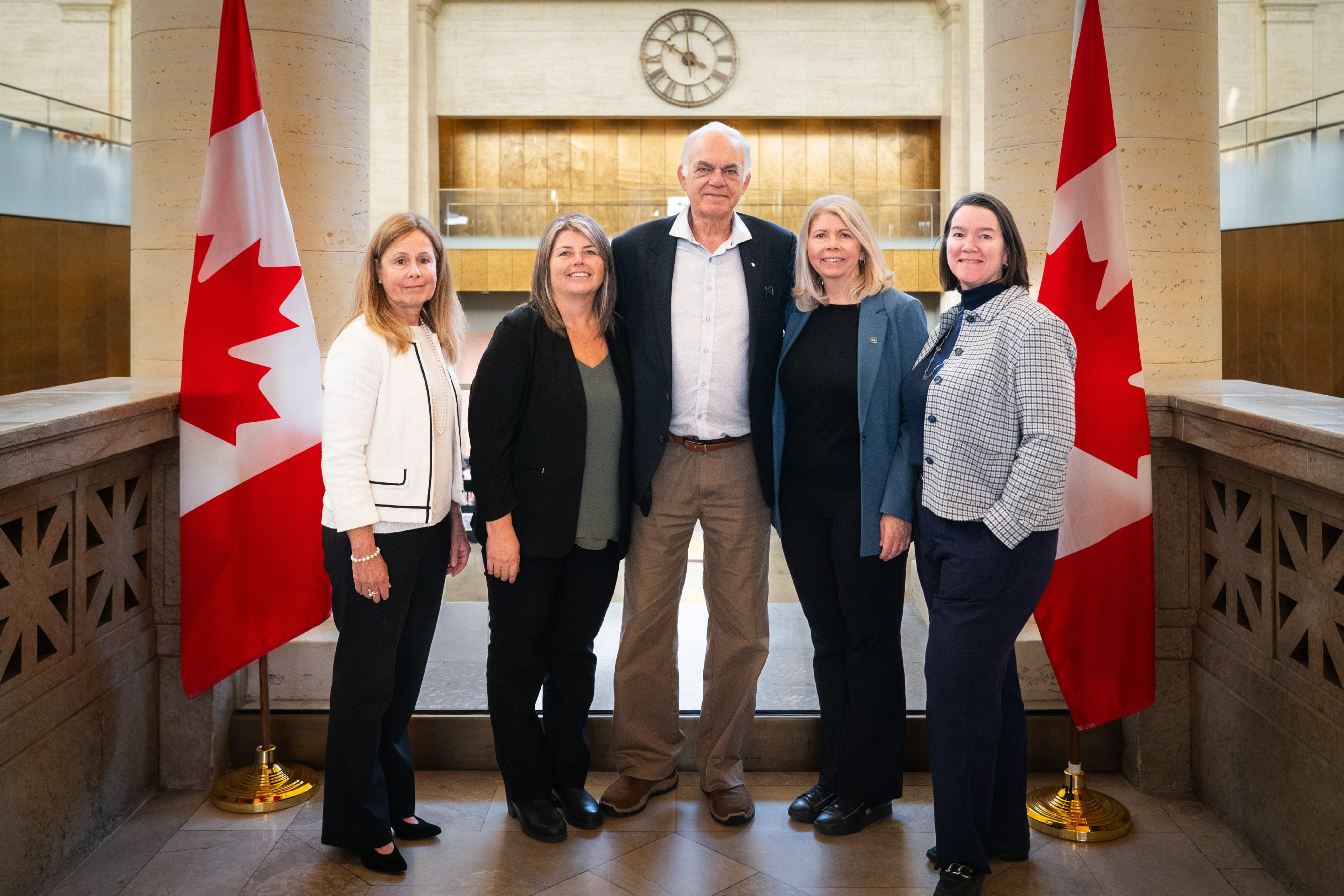 | Commissioner Konrad von Finckenstein (centre) with (from left to right):
|
Lyne Robinson-Dalpé retired in the last quarter of 2025-2026 after more than 20 years of dedicated service to the Commissioner’s Office in a 35-year career of public service. Lisa DeMoor has now joined the Office as Director, Advisory and Compliance.
Under the Commissioner's leadership, employees handle the daily tasks of administering the Conflict of Interest Act and the Conflict of Interest Code for Members of the House of Commons.
They make sure the processes and structures are in place to support their administration. These include strong internal controls to manage public money responsibly, protect public assets, and use resources in an effective and efficient way. An independent auditor reviews the Office's financial statements every year. Financial information for 2025-2026 is outlined in the Appendix.
Accessibility
Office employees also work on other important files like compliance with the Accessible Canada Act.
In December 2025, the Commissioner's Office released its second accessibility plan, for the 2025 to 2028 period. The updated plan builds on its 2024 progress report and incorporates best practices from its 2023-2025 accessibility plan. It outlines commitments to remove barriers across all priority areas under the Accessible Canada Act, and introduces new elements like culture, SMART objectives, and enhanced consultation processes.
Supporting bilingualism
In 2025-2026, the Commissioner's Office reviewed and updated its Policy on Official Languages.
The language requirements assigned to positions reflect employees' duties and work units, and obligations under the Official Languages Act related to service to the public and language of work. All term and indeterminate positions designated as bilingual are staffed with individuals who have the required linguistic profile.
The Commissioner's Office actively offers communications and services in both English and French. In particular, it:
-
gives members of the public a clear choice to communicate in their preferred official language when initiating contact with them, and
-
continues communications in the language chosen by the member of the public.
The Commissioner's Office makes the English and French versions of all written communications to the public available at the same time, and ensures they are of equal quality, no matter what communication method it uses.
Information management
The Commissioner's Office follows information management practices that include destroying its files on former public office holders who have been in post-employment under the Conflict of Interest Act for more than 10 years.
It identifies all internally held files of individuals who have passed this 10-year limit. Then it deletes their electronic information from the Office's records management system. If there are physical files, it shreds them.
Training
The Commissioner's Office makes sure employees get the right training so they have the knowledge and skills to do their jobs and help fulfill its mandate.
In 2025-2026, it started refining its onboarding process, which is designed to welcome new employees and give them clear, practical guidance from the moment they join the Commissioner's Office. It brings together what they need to know about their role, the Commissioner's mandate, and how the Office works day-to-day, so they can contribute to a healthy, respectful and effective workplace. Step‑by‑step checklists, orientation activities and follow‑up milestones help ensure each employee has the tools, knowledge and support they need to succeed in their new position, and feels part of the Office's mission from the start.
The Commissioner's Office offers employees ongoing training on systems and tools, and occasional training on policies and procedures. For example, in March 2026, harassment and violence prevention training was provided to all employees.
Each year, the Commissioner's Office identifies job-specific training opportunities in employees' individual learning and development plans. It also promotes the sharing of expertise, including soft skills, within the Office and through employees' active participation in external knowledge groups.
Crisis communications plan
In September 2025, the Senior Management Committee adopted a crisis communications plan. It identifies several scenarios that would require a crisis communications approach.
Staffing
To make sure it has the right positions and the right people in them to support its mandate, the Commissioner's Office ran seven staffing processes in 2025-2026.
In June, it submitted its first Pay Equity Annual Statement to the Office of the Pay Equity Commissioner.
Appendix: Financial resources summary
| (thousands of dollars) | |||||
Program Activity |
2024-2025
| 2025-2026 | Alignment to Government of Canada Outcomes | ||
| Actual Spending |
Main Estimates
|
Total
Authorities |
Actual Spending
| ||
|
Administration of the Conflict of Interest Code for Members of the House of Commons and the Conflict of Interest Act |
7,594 |
8,152 |
8,152 |
7,984 |
Government Affairs |
|
Contributions to employee benefit plans |
939 |
1,013 |
1,013 |
960 |
|
|
Total spending |
8,533 |
9,165 |
9,165 |
8,944 | |
|
Plus: cost of services received without charge |
918 |
N/A |
N/A |
998 | |
| Net cost of department |
9,451 |
9,165 |
9,165 |
9,942 | |
The Office of the Conflict of Interest and Ethics Commissioner’s budget process is set out in the Parliament of Canada Act. Before each fiscal year, the Office prepares an estimate of its budgetary requirements. The Speaker of the House of Commons considers the estimate then transmits it to the President of the Treasury Board, who lays it before the House with the Government of Canada’s estimates for the fiscal year. The Standing Committee on Access to Information, Privacy and Ethics reviews and reports on the Office’s effectiveness, management and operations, and its operational and expenditure plans.
The figures in this summary have not been audited. Complete audited financial statements will be available on the Office's website.